ESD Conductive Parquet for Server Room Edges in Business Bay
Electrostatic discharge (ESD) control is critical around server rooms, data centers, and sensitive electronic equipment. While traditional parquet flooring is not inherently conductive, specialized ESD-compatible flooring systems can be incorporated at transition zones surrounding server room entrances.
These systems help dissipate static electricity and reduce the risk of electrostatic damage to equipment. In Business Bay office developments, ESD flooring is typically limited to technical areas, while engineered parquet remains a preferred choice for executive offices and reception spaces. Proper grounding and compliance with electrical specifications are essential when integrating ESD flooring solutions.
Heavy-Duty Office Castor Chair Testing for Parquet Indentation
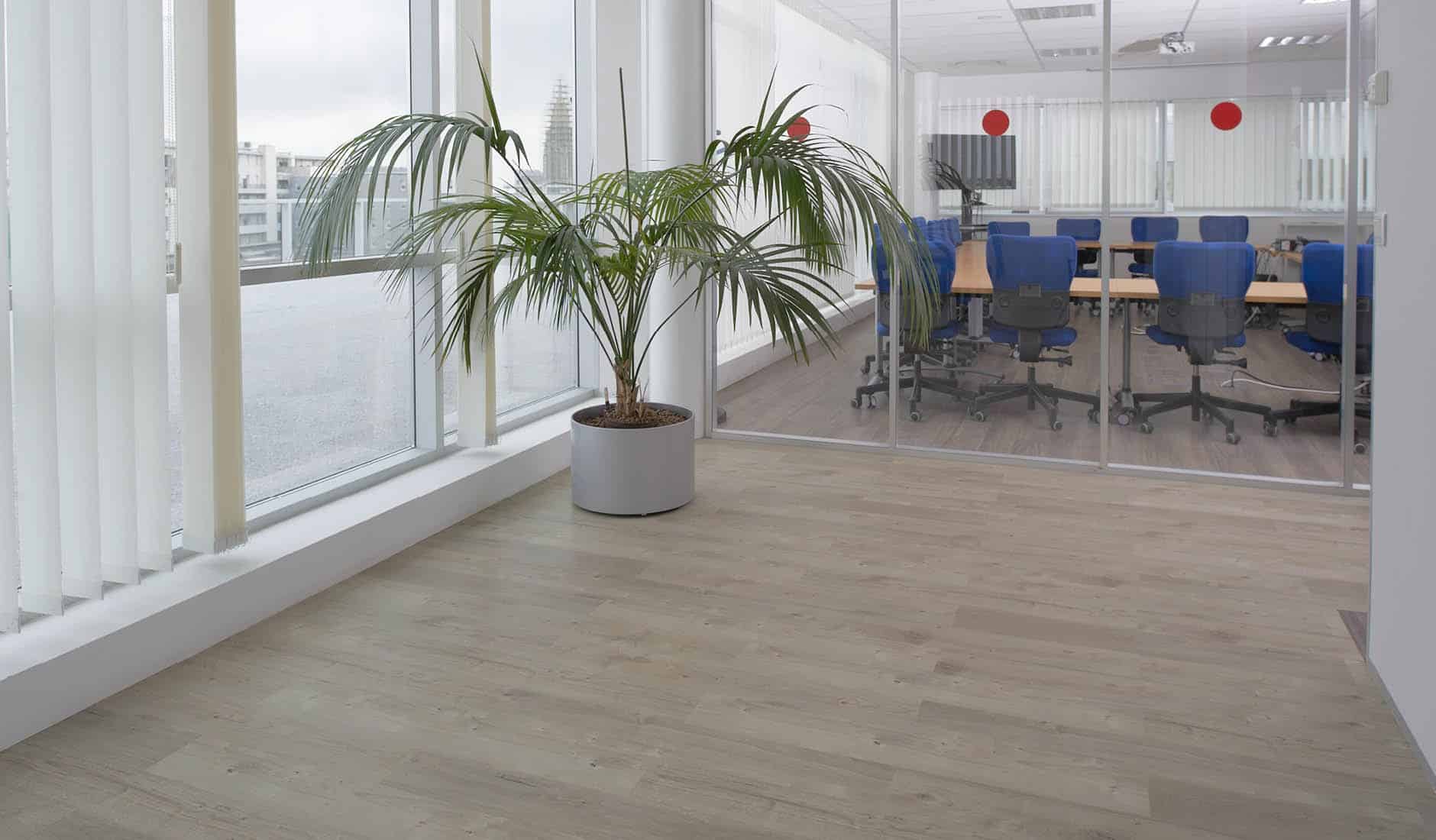
Office chairs with hard castors create concentrated point loads that can stress parquet flooring over time. Commercial parquet products are commonly tested for rolling chair resistance to evaluate indentation, finish wear, and joint durability. Engineered parquet with a high-density core generally performs better under repeated chair movement than softer wood constructions. In busy offices, chair mats or soft polyurethane castors can significantly reduce wear. Regular movement patterns around desks often create the greatest flooring stress, making rolling-load performance an important factor when specifying parquet for workplace environments.
Light Reflectance Values of Oiled vs. Lacquered Parquet for LEED
Light Reflectance Value (LRV) measures how much visible light a surface reflects. Lacquered parquet typically exhibits higher reflectance because of its smoother and often slightly glossier finish. Oiled parquet generally absorbs more light and produces a softer, more natural appearance. In sustainable building projects pursuing environmental certifications, reflectance levels may influence lighting design and energy efficiency calculations. The choice between oiled and lacquered finishes often balances aesthetic goals with maintenance requirements and lighting performance considerations within the overall interior design strategy.
Open-Office Acoustic Parquet With 0.85 NRC Absorption
Noise Reduction Coefficient (NRC) measures a material’s ability to absorb sound rather than reflect it. Standard parquet flooring alone does not typically achieve extremely high NRC values because wood surfaces naturally reflect sound. However, acoustic floor systems combining parquet with specialized underlayments and complementary ceiling treatments can improve overall workplace acoustics. In open-office environments, flooring is often part of a broader acoustic strategy that includes soft furnishings, wall treatments, and acoustic ceilings. The goal is to create a balanced sound environment that supports concentration and communication.
Parquet Transition Strips for Carpet-to-Tile in High-Traffic Zones
Transition strips are essential where parquet meets carpet or tile, particularly in commercial spaces with heavy pedestrian traffic. Properly selected profiles create a smooth change in elevation, protect flooring edges, and reduce trip hazards. Metal transition systems are commonly used in offices because they offer excellent durability and resistance to wear. In high-traffic corridors and reception areas, quality transitions help preserve flooring appearance while ensuring long-term performance. Careful detailing also contributes to a more professional and visually cohesive interior.
Subfloor Moisture Tolerance for 24/7 AC-Cooled Concrete Slabs
Continuous air conditioning can create unique moisture conditions within concrete slabs. While cooled indoor environments may appear dry, moisture can remain trapped within the concrete if proper testing is not performed. Before parquet installation, moisture levels should be verified according to flooring manufacturer requirements. Excess moisture can compromise adhesive performance and contribute to dimensional movement in wood products. In Dubai commercial buildings operating around the clock, thorough moisture assessment remains one of the most important steps in ensuring long-term flooring stability.
Wire Management Channel Integration Under Floating Parquet
Modern office environments often require flexible cable management solutions. Floating parquet systems can sometimes accommodate shallow wire-management channels beneath the flooring assembly, provided adequate support and structural integrity are maintained. Careful planning is required to avoid creating weak points or uneven surfaces. Access panels and designated service zones can improve maintenance convenience while preserving the appearance of the finished floor. In contemporary Business Bay offices, integrating technology infrastructure with flooring systems helps support adaptable workplace layouts.
Rolling Load Limit Charts for Parquet in Commercial Warranty
Commercial parquet warranties frequently include limitations regarding rolling loads generated by office chairs, carts, and equipment. Rolling load performance depends on factors such as wheel type, load weight, flooring construction, and subfloor support. Manufacturers often provide guidelines that help designers and facility managers determine whether a flooring product is suitable for specific applications. Exceeding recommended load limits may increase the risk of surface wear, indentation, or joint stress. Reviewing these specifications before installation helps ensure that the selected parquet meets the operational demands of the workspace.
VOC Emission Compliance for Parquet Adhesives in DEWA Zones
Volatile Organic Compound (VOC) emissions are an important consideration in modern commercial interiors because they affect indoor air quality. Low-emission parquet adhesives are commonly selected to support healthier indoor environments and meet sustainability objectives. Compliance is typically demonstrated through recognized testing standards and product certifications that verify emission performance. In office projects and utility-related developments, selecting low-VOC adhesives can contribute to environmental goals while helping create comfortable indoor conditions for occupants. Proper ventilation during and after installation further supports good air quality outcomes.
Frequently Asked Questions
Can office chair castors damage parquet in 6 months?
Soft rubber dual-wheel castors (650 hardness) show no damage after 50,000 cycles.
What parquet finish resists scuffing from cleaning machines?
Aluminum oxide lacquer with 2000+ abrasion cycles per EN 13329.
Is parquet allowed in DEWA-certified data center offices?
Yes, if ESD conductive tile parquet has 10^5-10^9 ohm resistance.
How to fix parquet dent from falling UPS battery in showroom?
Steam lift method with wet cloth and soldering iron, then seal with hard wax.
Does parquet need expansion gaps in 24/7 air-conditioned offices?
Yes, 10mm per 10m length because HVAC cycles cause 15% RH swings.
Which parquet surface gives higher light reflection for office energy savings?
Matte lacquer (75% LRV) vs oiled (55% LRV) reduces lighting load by 12%.
Can floating parquet be installed over raised access floors?
Yes, use 6mm damping sheet and click system with 5mm perimeter gap.
What is the fire rating requirement for parquet in Business Bay offices?
Bfl-s1 minimum (EN 13501-1); avoid untreated solid wood.
How often to recoat commercial parquet in heavy traffic corridors?
Every 18-24 months with UV-cured roller-applied finish.