Parquet Porcelain Wood-Look for Direct Sun and Rain Exposure
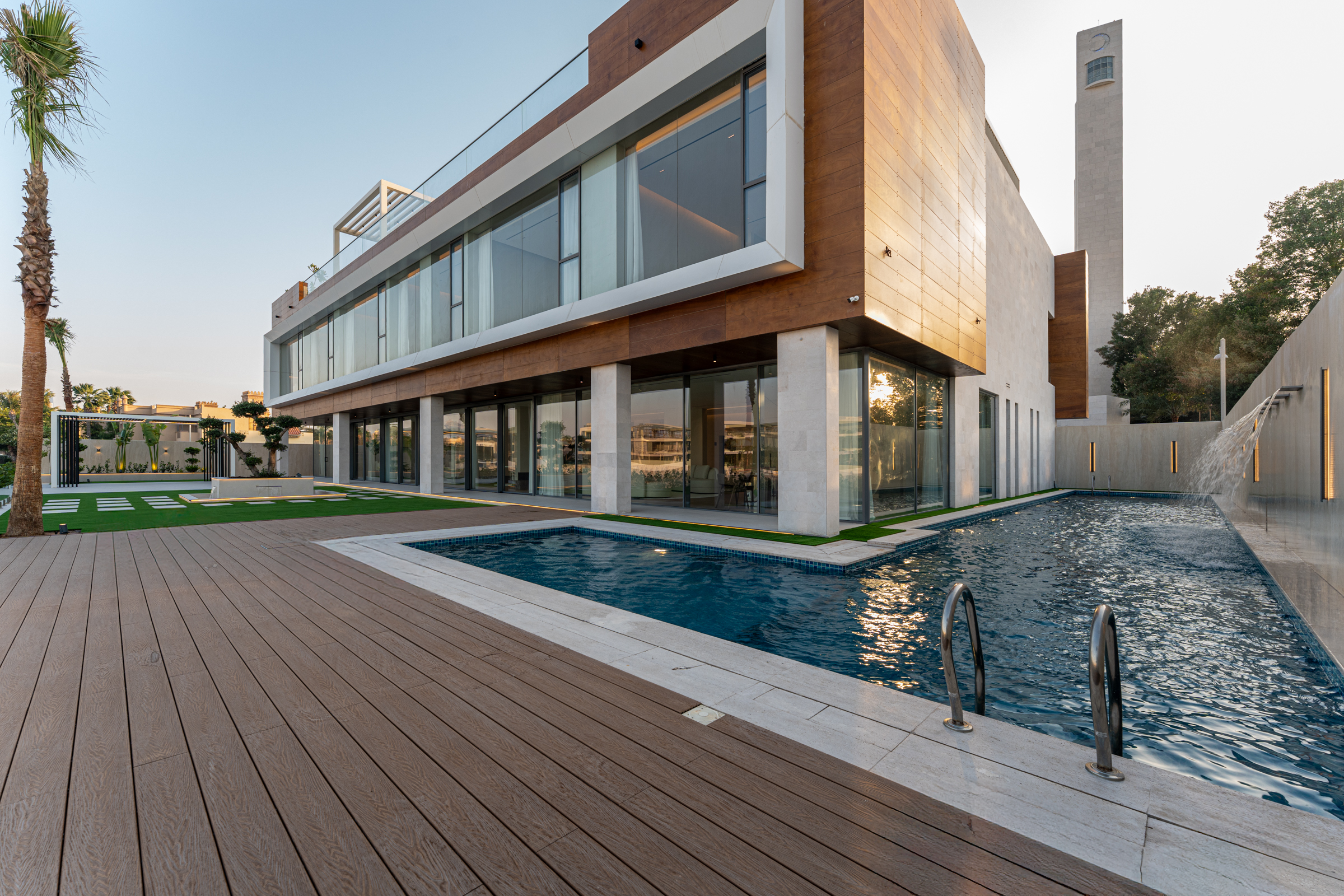
For rooftops exposed to direct sun and rain, true parquet is generally not suitable due to moisture and UV sensitivity. Porcelain wood-look tiles are often used instead because they replicate the appearance of timber while offering full resistance to water absorption, UV degradation, and thermal cycling. In Dubai rooftop environments, this material is preferred where aesthetics must combine with extreme durability. It eliminates risks such as swelling, delamination, and finish breakdown that would typically affect real wood-based parquet under outdoor exposure.
Drainage Gap Design Under Parquet for Flat Rooftop Slopes
If parquet-inspired systems are used on rooftops, proper drainage detailing becomes critical. Flat rooftop slopes rely on controlled water movement toward drainage points, and any flooring system must not obstruct this flow. Drainage gaps or raised pedestal systems allow water to pass beneath the surface, preventing pooling. Without proper drainage design, moisture retention can lead to long-term substrate damage and biological growth. In rooftop applications, drainage is a primary design requirement rather than an accessory feature.
UV Degradation Resistance of Parquet Finish at 50°C Surface Temp
At rooftop surface temperatures reaching 50°C or higher, UV exposure accelerates chemical breakdown of parquet finishes. This can result in fading, discoloration, and surface embrittlement over time. Standard indoor parquet finishes are not designed for this level of thermal and UV stress. Even UV-stabilized coatings degrade under prolonged exposure in outdoor conditions. In Dubai’s climate, rooftop applications require specialized outdoor-rated materials rather than conventional parquet systems to maintain long-term appearance and performance.
Wind Uplift Resistance for Parquet on High-Rise Rooftops
Wind uplift forces on rooftops can create significant mechanical stress on any loosely installed flooring system. Parquet, particularly floating systems, is highly vulnerable to uplift without proper anchoring. Even small pressure differentials can cause movement or detachment at edges. For this reason, traditional parquet is not recommended for exposed rooftop use. Secure mechanical fixing systems or heavy bonded assemblies would be required, but even then, environmental exposure typically exceeds material design limits.
Parquet Surface Temperature Reduction Using Reflective Coating
Reflective coatings can reduce surface heat absorption by increasing solar reflectance, but their effectiveness on wood-based parquet is limited compared to mineral-based materials. While such coatings may slightly reduce surface temperature, they do not eliminate heat buildup under intense sunlight. In rooftop environments, temperature reduction strategies typically rely on shading structures, material substitution, or high-albedo surfaces rather than modifying parquet alone.
Thermal Expansion Joint Frequency for Rooftop Parquet (>10m Runs)
Long exposed runs exceeding 10 meters experience significant thermal expansion and contraction due to temperature fluctuations. In outdoor conditions, movement is amplified compared to indoor environments. Expansion joints must therefore be placed at shorter intervals to prevent buckling, warping, or joint separation. However, even with frequent joints, wood-based parquet remains structurally vulnerable in rooftop environments due to combined thermal, UV, and moisture stress.
Parquet Slip Resistance When Wet from Rooftop Irrigation
Rooftop irrigation introduces a controlled but repeated wetting cycle that significantly affects slip resistance. When water films form on smooth parquet surfaces, friction decreases sharply, increasing slip risk. Even textured finishes can become hazardous when algae or dust mixes with moisture. In outdoor settings, slip resistance must be treated as a primary safety parameter, and materials designed specifically for wet exterior conditions are typically preferred over parquet.
Parquet Compatibility with Rooftop Planters and Self-Watering Systems
Planters and self-watering systems introduce persistent localized moisture exposure, which is incompatible with traditional parquet. Even minor overflow or condensation can migrate into seams and cause swelling or rot over time. While protective membranes can reduce risk, they cannot fully eliminate moisture migration in outdoor conditions. In rooftop landscaping, separation layers and waterproof substrates are essential, and wood-based flooring is generally avoided near irrigation zones.
Parquet Color Stability After 2000 Hours QUV Testing
QUV testing simulates long-term UV exposure using accelerated laboratory conditions. After 2000 hours, parquet finishes typically show measurable color change depending on coating quality and pigment stability. Lighter tones may yellow or shift slightly, while darker tones can fade or lose saturation. High-performance UV-stabilized systems perform better but still experience gradual change. This highlights why parquet is primarily specified for interior environments where UV exposure is controlled rather than extreme outdoor conditions.
Frequently Asked Questions
Can real wood parquet be installed on Dubai rooftop terraces?
No, use porcelain wood-look tiles with rectified edges and R11 slip rating.
What is the maximum parquet temperature before warping?
55°C surface temp; above that causes irreversible cupping.
How to slope rooftop subfloor for parquet drainage?
Minimum 2% fall using screed, with scupper drains every 15m².
Does rooftop parquet require UV stabilizers in Dubai?
Yes, add HALS (hindered amine light stabilizers) to lacquer.
Which parquet pattern minimizes thermal movement?
Small-format chevron (75mm) vs wide planks reduces stress.
Can I walk barefoot on rooftop parquet at 2pm in July?
No, surface reaches 65°C; use light-colored reflective coating.
How to prevent parquet edge curling from rooftop moisture?
Ventilated raised system with 20mm air gap beneath parquet.
Is parquet allowed on Dubai rooftop restaurants with DM approval?
Yes, if slip rating R11 and fire class Bfl-s1 with soot reduction.
What expansion gap is needed for 20m rooftop parquet run?
25mm at both ends, covered by stainless steel expansion profile.