EN 71-3 Toy Safety Compliance for Parquet Finishes
EN 71-3 is a European safety standard that limits the migration of harmful elements (such as heavy metals) from coated surfaces under conditions simulating ingestion or prolonged contact.
When parquet finishes claim EN 71-3 compliance, it means the lacquer, oil, or coating system has been laboratory-tested for child safety relevance.
While parquet is not a toy, this certification is often used for children’s bedrooms and play areas as a higher safety benchmark. In Dubai residential projects, it is commonly referenced in premium “family-safe” flooring specifications.
Slip Resistance Wet Test for Parquet After Juice Spills
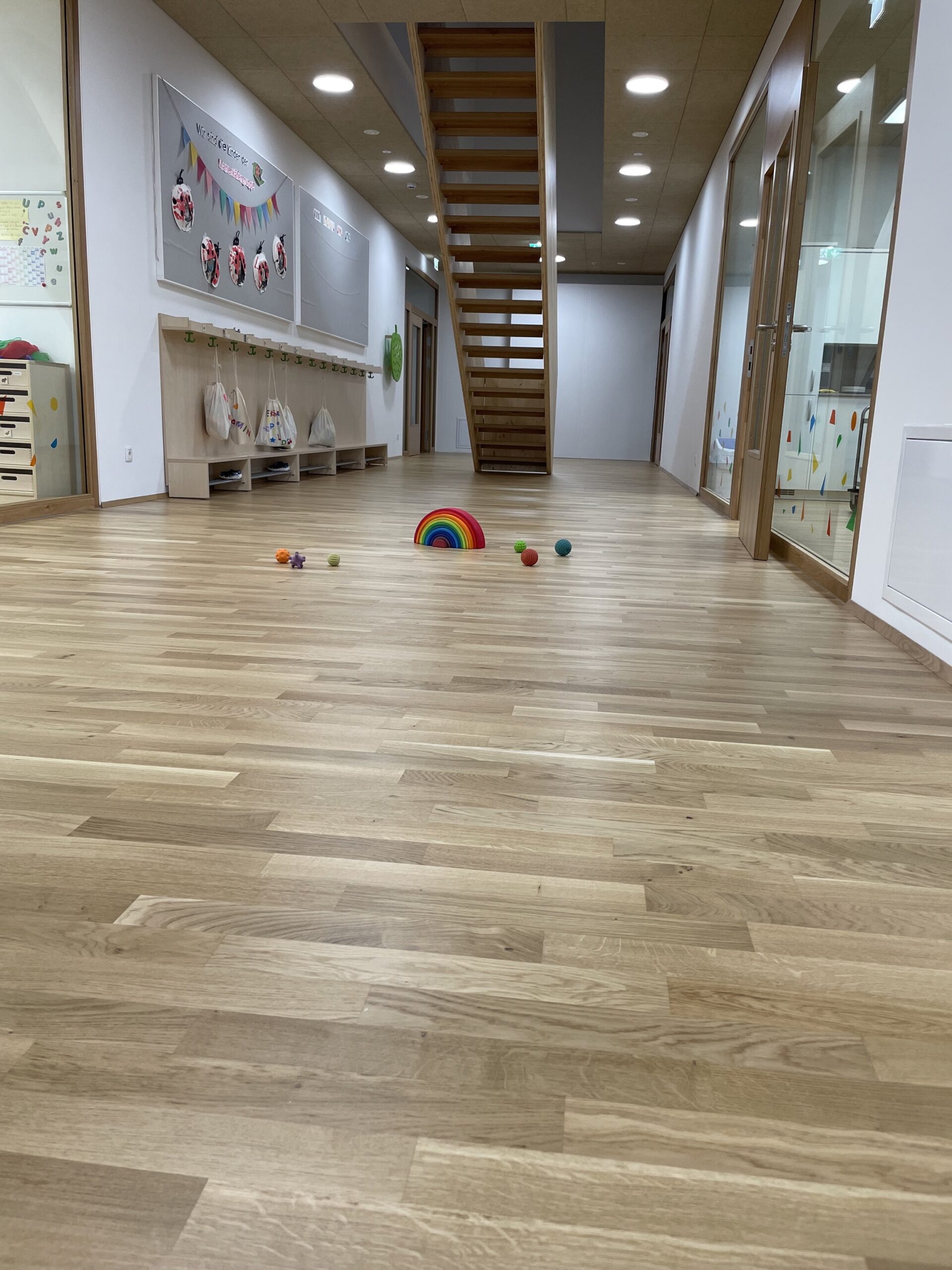
Wet slip resistance testing evaluates how parquet performs when liquids like juice or water are present on the surface. Spills create a temporary reduction in friction, especially on smoother lacquered finishes. The slip risk increases further if residue is not cleaned promptly. Matte or textured finishes generally perform better under wet conditions than high-gloss coatings. In family homes, especially with children, quick spill response is more important than relying solely on coating properties for safety.
Impact Attenuation of Parquet Under 1m Fall Height for Toddlers
Impact attenuation measures how much a floor reduces injury risk during a fall. Parquet, being a rigid surface, provides minimal shock absorption compared to rubber or foam flooring. From a 1-meter fall height, engineered wood does not significantly reduce impact force. In toddler environments, safety is usually improved through supplementary soft zones such as rugs or play mats. In Dubai homes, parquet is typically combined with designated soft play areas rather than used alone in high-risk zones.
Parquet Joint Gap Limit to Prevent Small Object Entrapment
Joint gap control is important in preventing small objects from becoming trapped between planks. Engineered parquet is manufactured with tight tolerances to minimize gaps, but seasonal humidity changes can still cause minor expansion or contraction. Excessive gaps may allow debris, crumbs, or small toys to lodge between boards. In child-friendly interiors, stable indoor humidity and proper installation help maintain consistent joint spacing and reduce hygiene and safety concerns.
Antimicrobial Silver Ion Parquet Coating for Germ Reduction
Silver ion coatings are designed to inhibit microbial growth on flooring surfaces by disrupting bacterial cell processes. These antimicrobial finishes do not sterilize surfaces but help reduce microbial load between cleaning cycles. In high-use family areas or shared living spaces, this can contribute to improved hygiene performance. However, effectiveness depends on moisture levels, cleaning habits, and coating durability. In Dubai residential environments, they are often used as a supplementary hygiene feature rather than a standalone solution.
Abrasion Resistance of Parquet Under Toy Car Wheels
Toy car wheels create repetitive micro-abrasion patterns that can gradually wear down parquet finishes. UV-cured lacquers and high-performance protective coatings provide better resistance than softer finishes, but continuous tracked movement in the same path will still cause visible wear over time. In children’s playrooms, using dedicated mats or play zones helps distribute load and preserve finish integrity. Abrasion resistance is strongly linked to coating hardness and maintenance frequency.
Indentation Recovery From Furniture Tip-Over Events
Indentation recovery refers to how well parquet rebounds after being compressed by heavy or sudden loads, such as furniture tipping or impact events. Engineered parquet has limited but measurable recovery depending on core density and finish elasticity. Deep impacts may leave permanent marks, especially if concentrated on small contact points. Using protective pads under furniture and ensuring stable placement significantly reduces the risk of permanent indentation damage in residential environments.
Parquet Edge Rounded Radius for Crawling Safety Zones
Rounded or beveled edge profiles improve safety in areas used by toddlers and crawling children. Sharp edges increase the risk of minor injuries during falls or close-contact play, while softened edges distribute impact more gently. In modern parquet systems, edge design is both an aesthetic and safety consideration. In family-oriented Dubai interiors, slightly rounded profiles are commonly preferred in nurseries and playrooms for added child safety without compromising visual appeal.
Static Charge Dissipation for Parquet Near Electronics
Static electricity can accumulate in dry, air-conditioned environments, especially where synthetic materials are present. Parquet is generally less prone to static buildup than fully synthetic flooring, but it is not inherently conductive. Near sensitive electronics, static dissipation is managed primarily through humidity control and environmental balancing rather than the flooring itself. In residential offices or media rooms, maintaining moderate indoor humidity reduces static shocks and improves overall comfort without requiring specialized conductive flooring systems.
Frequently Asked Questions
Is parquet hygienic for a Dubai nursery with daily mopping?
Yes, seamless lacquered parquet has no grout lines and 0% water absorption.
What parquet finish withstands disinfectant fogging machines?
2K polyurethane with 5000+ chemical cycles, no discoloration.
Can parquet cause splinters for crawling babies?
No, engineered parquet with bevel-less square edge and 400-grit finish.
How to repair parquet chewed by a toddler?
Sand local 2cm area, fill with resin, and recoat with non-toxic hard wax.
Does parquet require special cleaning for allergy-friendly nursery?
Yes, use HEPA vacuum + steam mop at 120°C for dust mite removal.
Which parquet pattern reduces slip risk for running kids?
Random plank layout with natural grain texture, not high-gloss chevron.
What is the acceptable parquet surface temperature for barefoot kids?
24-28°C; install insulation layer if over underfloor heating.
Can parquet be installed over in-floor radiant cooling in nurseries?
No, condensation risk; use dedicated cooling-free zones.
How often to apply anti-static treatment on nursery parquet?
Every 3 months with cationic surfactant spray.