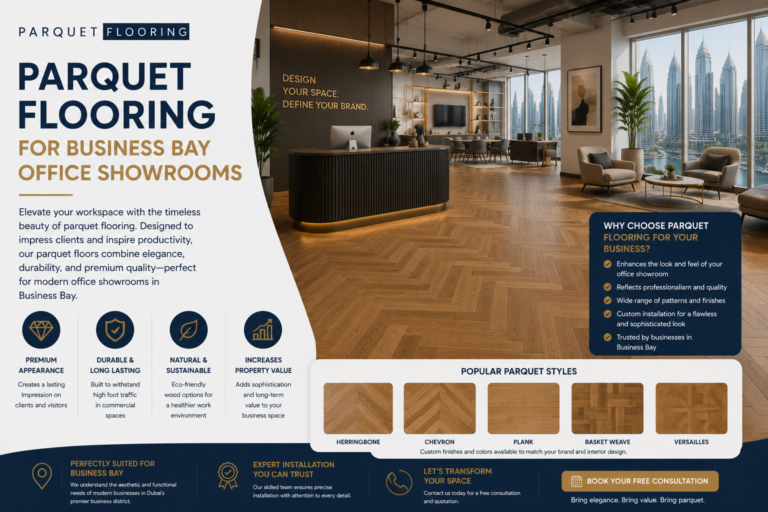
Parquet Ball Bounce Consistency Across 100m² Court Area
In sports flooring, consistent ball rebound across the entire surface is critical for fair play. Parquet used in courts is engineered with strict flatness tolerances and uniform elasticity so that bounce height does not vary between zones. Any subfloor irregularity, uneven adhesive spread, or localized wear can subtly alter rebound behavior. That’s why sports-grade parquet systems are installed over highly controlled substructures designed to maintain uniform energy return across the full 100m² playing area.
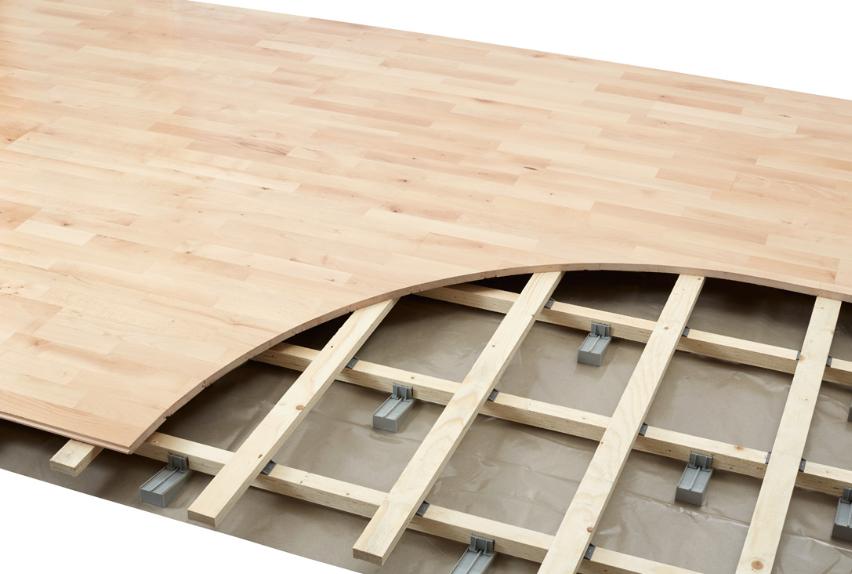
Shock Absorption and Impact Control in Squash Court Flooring
Shock absorption in squash court flooring should be considered as part of the complete sports-floor system rather than the parquet surface alone. A suitable resilient subfloor or sprung construction can help manage impact forces during repeated movement, lunging, and changes of direction while maintaining a stable playing surface. The required performance depends on the court design, substrate, flooring construction, and intended level of play. For broader facility requirements, sports flooring solutions can be evaluated alongside a parquet-based system, while the wooden sports flooring category provides a relevant option for indoor courts where a wood surface is preferred.
Surface Grip and Slip Resistance for Squash Court Flooring
Squash requires a flooring surface that provides consistent traction while allowing players to accelerate, stop, lunge, and change direction without excessive slipping or unwanted resistance. Surface performance depends on the finish, cleanliness, footwear, and environmental conditions within the court rather than on a single friction value. Dust and moisture should be controlled because contamination can change the way the surface interacts with footwear. For facilities comparing different systems, sports flooring in Dubai can help establish the broader performance requirements before selecting a parquet-based squash flooring system.
Parquet Line Paint Adhesion for Court Markings
Court markings rely on specialized paints or coatings that must bond securely to parquet without peeling under constant foot traffic. Adhesion depends on surface preparation, finish compatibility, and coating chemistry. If the parquet surface is too glossy or contaminated, paint adhesion can fail, leading to fading or chipping lines. In professional sports halls, court marking systems are integrated with flooring specifications from the design stage to ensure long-term durability.
Parquet Indentation Recovery from Landing After Jump
Repeated jumping creates high-impact point loads when athletes land, especially in volleyball or basketball. While engineered parquet may recover slightly from minor compression due to its layered structure, most indentation effects in sports environments come from subfloor deformation rather than the wood surface itself. High-quality sports systems distribute impact energy to minimize permanent surface damage and maintain consistent playing conditions.
Parquet Surface Uniformity for Rolled Ankle Prevention
Surface uniformity is essential in preventing ankle injuries caused by uneven footing. Even small height variations between parquet planks or localized swelling can create instability during fast lateral movement. Sports-grade parquet is manufactured and installed with strict leveling tolerances to ensure a perfectly continuous plane. Regular maintenance is also required to prevent warping or joint lifting that could compromise athlete safety.
Parquet Acoustic Reflectance for Squash Ball Impact
In enclosed sports like squash, acoustic reflectance is part of the game experience. Parquet reflects sound energy efficiently, contributing to sharp auditory feedback when the ball strikes the floor. However, excessive reverberation in poorly treated halls can make sound control challenging. The flooring must balance durability with acoustic behavior so that impact sounds remain clear but not overwhelming within enclosed court environments.
Moisture Stability and Climate Control for Squash Court Flooring
Wood-based squash court flooring responds to changes in moisture and temperature, so stable indoor conditions and appropriate subfloor preparation are important for maintaining dimensional stability. Excessive humidity or moisture can contribute to movement, joint problems, or surface deterioration, while overly dry conditions can also affect wood flooring. Installation should therefore account for the moisture condition of the substrate, suitable expansion provisions, and the operating environment of the sports facility. Regular cleaning and prompt removal of liquid are also important for maintaining the playing surface. For projects requiring a broader comparison of wood-based options, parquet flooring provides additional information on parquet systems and installation.
Parquet Slip Resistance for Sweat-Dropped Zones
Sweat accumulation in high-traffic sports zones can significantly reduce surface friction, increasing slip risk during rapid movement. Sports parquet finishes are designed to maintain traction even under light moisture exposure, but performance decreases if liquid is not promptly managed. Ventilation, cleaning protocols, and surface texture all contribute to maintaining safe slip resistance levels in competitive environments where athlete safety is critical.
Frequently Asked Questions
Q: What type of flooring is suitable for a squash court?
A: A purpose-designed sports flooring system with a stable, appropriately resilient wood or other approved sports surface can be suitable. The complete floor assembly should be selected according to the court design, performance requirements, and applicable standards.
Q: Is parquet suitable for squash court flooring?
A: Parquet can be used for indoor sports applications when the flooring construction, surface finish, subfloor, and installation method are appropriate for squash. It should not be treated as ordinary residential parquet.
Q: Does squash court flooring need shock absorption?
A: Impact management is an important consideration because squash involves frequent lunges, rapid stops, and directional changes. Shock absorption should be evaluated as a property of the complete flooring system, including its subfloor or resilient layers.
Q: What makes good squash flooring?
A: Good squash flooring should provide a stable, level surface with consistent traction, suitable impact characteristics, dimensional stability, and a finish appropriate for repeated athletic use.
Q: How does humidity affect parquet squash court flooring?
A: Wood reacts to changes in moisture content. Excessive or rapidly changing humidity can contribute to expansion, contraction, joint movement, or surface problems, so indoor environmental conditions should be controlled.
Q: How should squash court flooring be maintained?
A: Regular dust removal, appropriate cleaning products, prompt removal of liquids, and periodic inspection of the surface and joints help maintain performance. The maintenance method should follow the flooring manufacturer’s recommendations.
Q: Can the same parquet flooring be used for squash and badminton?
A: Not necessarily. Although both are indoor sports, their movement patterns and performance requirements differ. Flooring should be specified according to the requirements of the particular sport and facility.
Q: What should be checked before installing squash court flooring in Dubai?
A: The substrate condition, moisture level, flatness, indoor climate, court dimensions, intended usage, flooring construction, surface finish, and installation requirements should all be assessed before installation.
Q: Are there squash court flooring suppliers in Dubai?
A: Yes. When comparing squash court flooring suppliers in Dubai, assess their experience with sports flooring, material specifications, installation capability, maintenance support, and suitability of the proposed system for squash.
Q: Can the existing floor in a squash court be repaired or refinished?
A: In some cases, yes. The appropriate solution depends on the type and extent of damage, surface condition, substrate stability, and the existing finish. Minor surface wear may require refinishing, while structural problems may require localized or more extensive intervention.